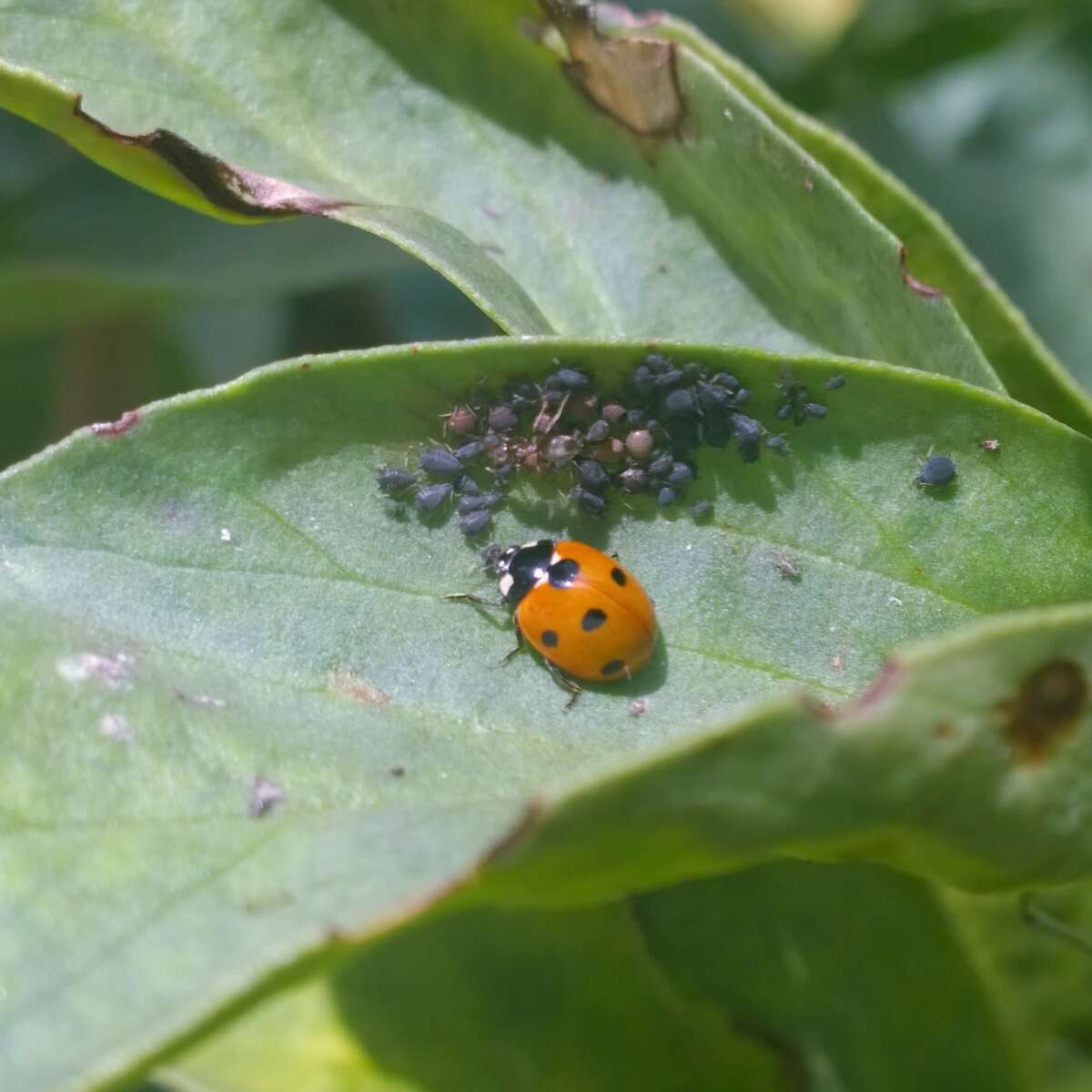
Aphids
What do Aphids look like? 🔗
Generally 1-5mm long with a soft body, long legs and antennae, and usually a prominent pair of tube-like structures at the end of the abdomen. Aphids come in a selection of colours, with more than 500 species in Europe. They exist in both winged and wingless forms.
How many types of Aphid are there? 🔗
There are over 4,000 types of Aphid, of which 250 are known as pests to our garden plants and food crops.
Symptoms: 🔗
In large numbers clustered around tender young growth they cause young shoots to become weak and distorted, sometimes killing the plant. Aphids consume large volumes of sap, excess being secreted as a sticky ‘honeydew’ that may coat the leaves beneath. Sooty moulds may develop on the honeydew-coated leaves.
Some ants ‘farm’ aphids for the honeydew that they produce. This means that they protect them from predators and move the pests around a plant to new ‘pastures’. If a tree is badly infested with ants and aphids, a band of insect glue round the trunk stops the ants climbing up the tree. Without protection, aphid numbers will decline as they are exposed to more parasites and predators.
Prevention and/or treatment: 🔗
Avoid using too much nitrogen-rich fertiliser which encourages soft leafy growth which is attractive to aphids.
Encourage creatures that feed on aphids, such as birds, insects and their larvae, earwigs and bats.
Grow flowers that attract hoverflies, lacewings and ladybirds (see How to grow flowers to attract beneficial insects).
During winter, hang up pieces of fat in fruit trees and above rose bushes to attract blue tits which eat aphid eggs.
Inspect plants regularly and squash any aphids that are seen. Pick off heavily infested shoots and leaves and drop into a bucket of soapy water. A strong jet of water can also dislodge them.
Covers such as horticultural fleece can give good protection against aphids and the viruses they transmit.
Learn more about Aphids
-
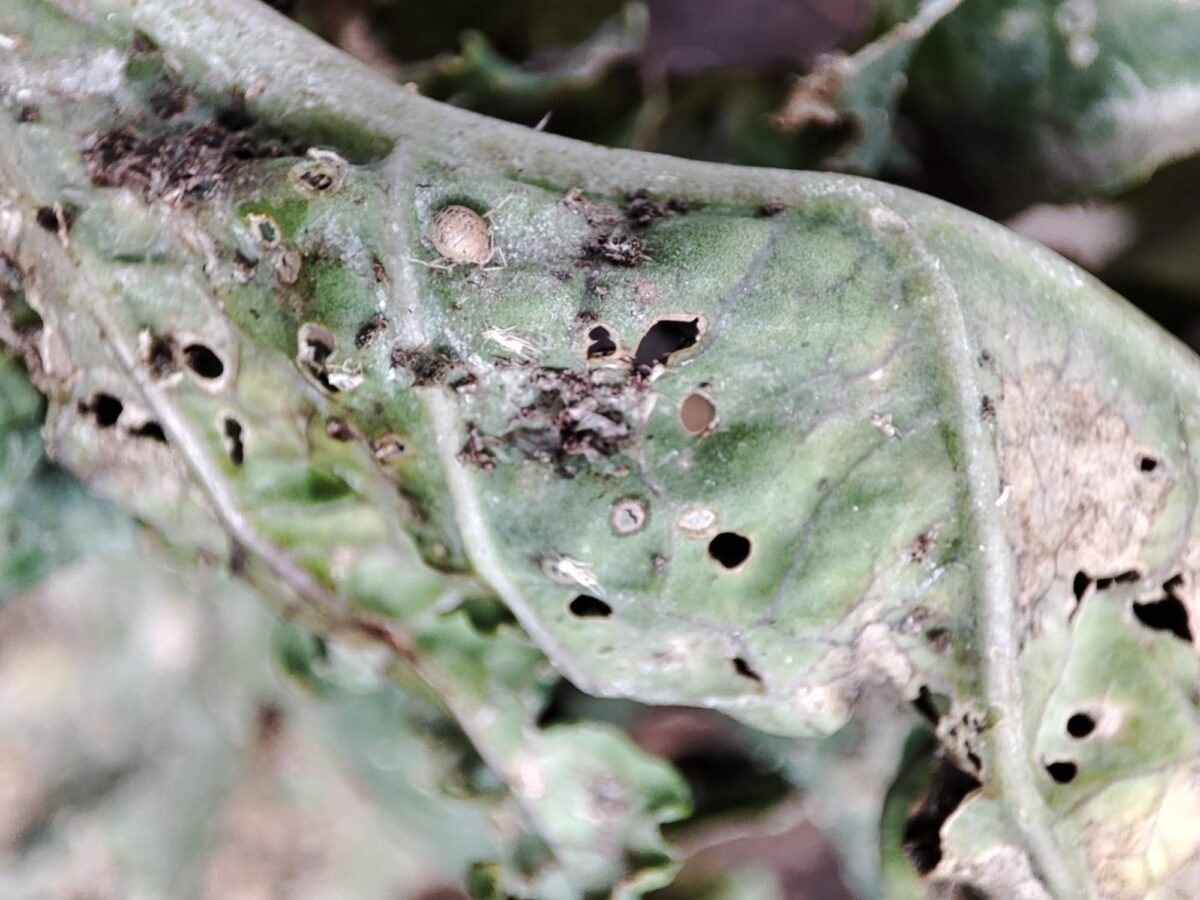
Exploding aphid hunt
Cabbage aphids damage brassicas, but parasitic wasps help control them. This members experiment showed us how you can spot the signs in your garden.
-
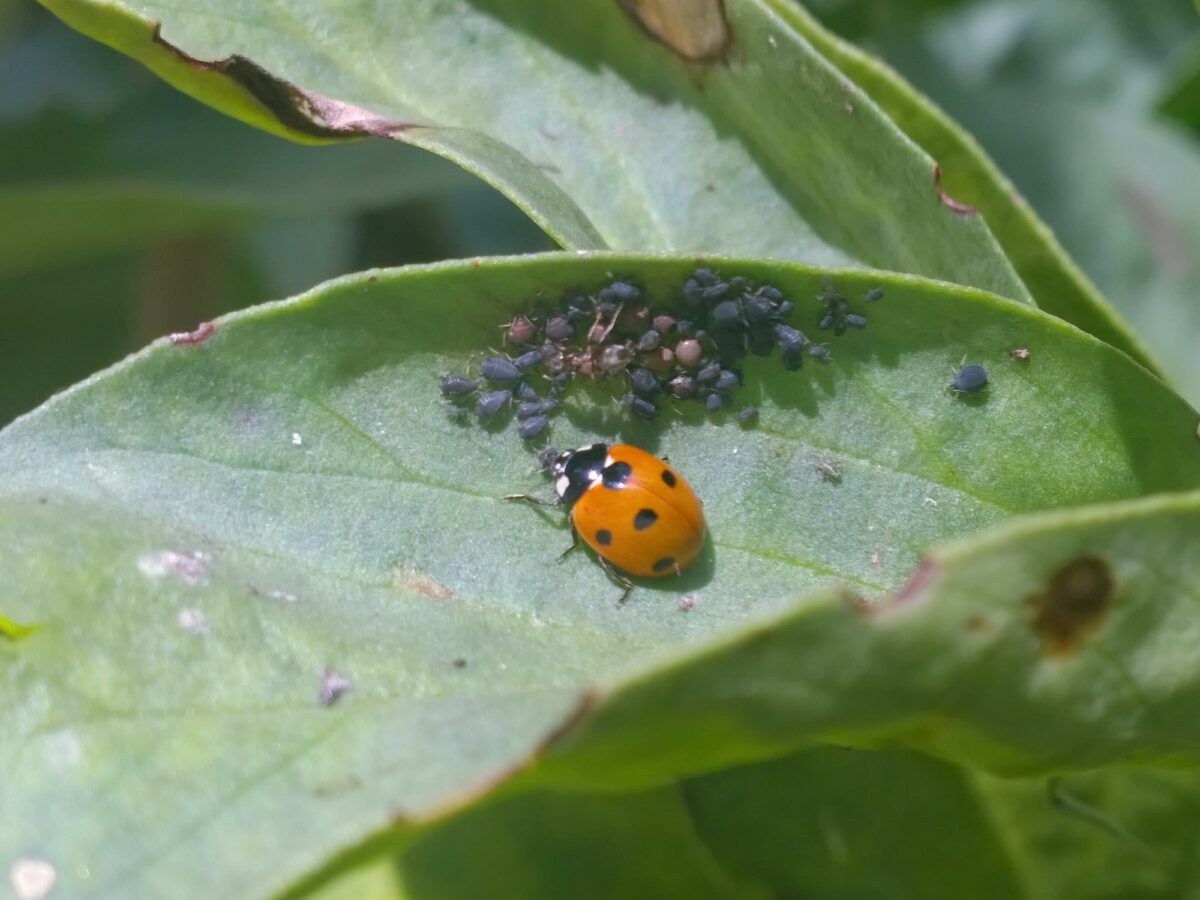
A complete guide to: organic pest control for fruit and vegetables
From allium leaf miner to wireworm, there are many pests that can affect growers, but there are ways to treat and prevent them using organic methods.
-
Aphidogeddon – the hands-off approach to aphids
Research Manager Anton Rosenfeld describes the boom and bust of aphid populations throughout late spring/early summer as well as the 'natural enemies' that help keep these little critters at bay.
Love our growing advice?
Get a direct link to our horticultural advice team, as well as members-only online resources with a Garden Organic membership.