Bust a glut – how to harvest and store your veg!
You’ve worked hard to grow your vegetable crops – particularly this year! So there’s nothing worse than feeling you’re wasting your hard-won produce.
Here’s how to make the most of your harvest, with tips on when to pick, how to store and how long crops will keep.
Tomato 🔗
How to preserve it: freeze, dry
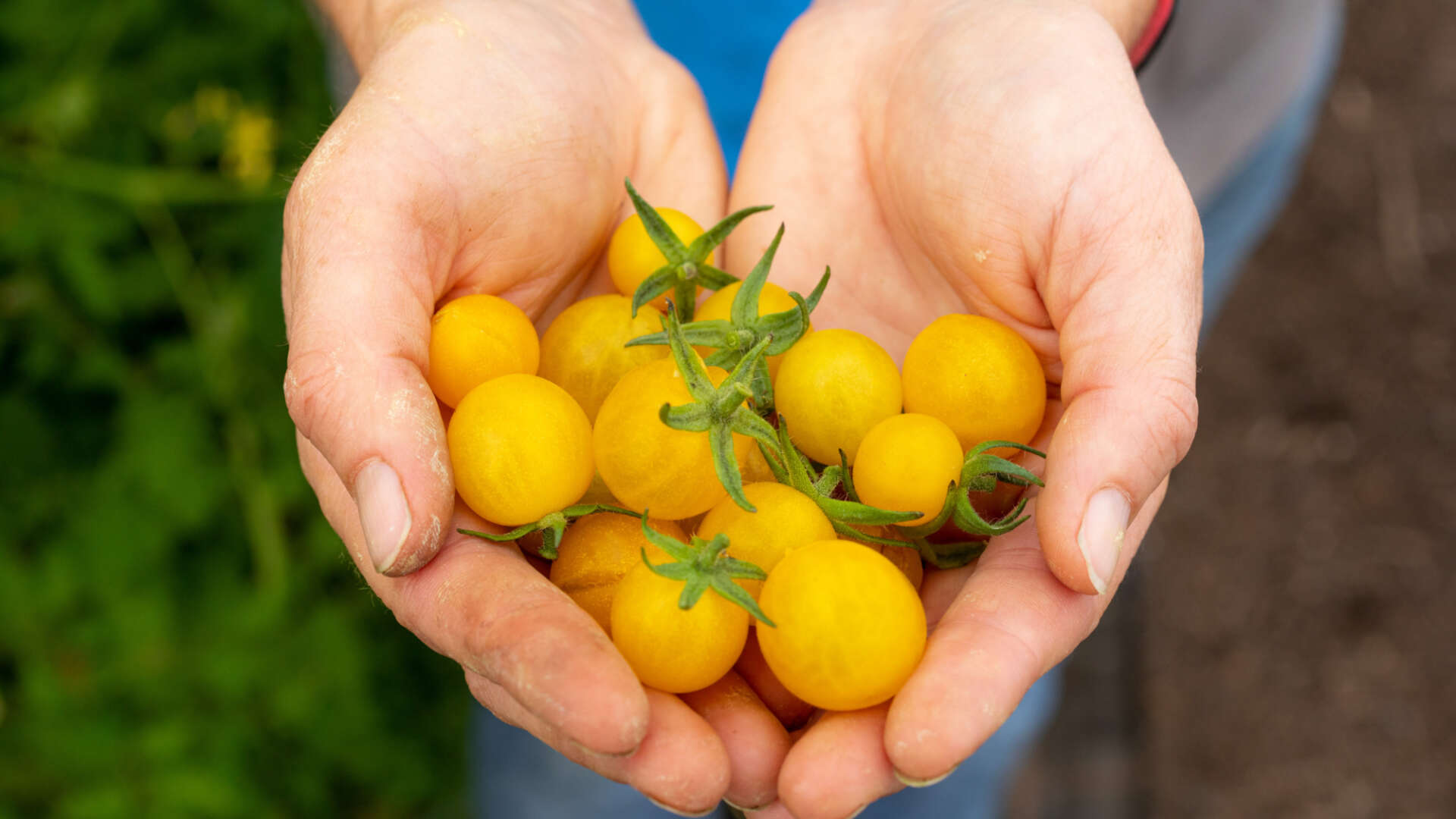
When to harvest: Best harvested early morning, before heat sets in, and when half ripe (half green and red) on the vine so they can ripen indoors.
How to store: They can be frozen whole or halved on a baking tray before popping into freezer bags. Defrost fully and remove the skin before using in soups, stews and sauces. You can also sprinkle halves with oil and salt, and dry on baking parchment in a cool oven for 2 hours and then stored in oil in sterilised jars.
Use by: 6 months if frozen, 1 week if stored in oil in the fridge.
Beans and peas 🔗
How to preserve it: freeze, pickle, dry
When to harvest: Harvest when pods are young and tender (before the bumps of seeds can be seen/felt), and in the morning when sugar levels are high.
How to store: Blanch in boiling water for a three minutes then dunk in a bowl of iced water to stop the flavour and texture from degrading. Soak for four minutes and drain/dry thoroughly. Freeze on a baking tray before adding to resealable bags. Beans can also be pickled for longer-term storage (for method, see courgette/marrow), and peas can be dried in their pods and stored in an airtight container.
Use by: 6-12 months if frozen or dried, and 2-3 months if pickled.
Onion/garlic 🔗
How to preserve it: cure, pickle
When to harvest: Pull onions and garlic when their leaves turn yellow. Harvest on a sunny day and leave to dry on the ground for a few days until the skin thickens.
From plot to pot: Whole onions and garlic bulbs can be cured by laying out on trays in a cool room. Once the skins and necks turn papery, plait and hang up (avoid storing near potatoes as these can absorb moisture). Small onions and cloves can also be pickled, making them taste sweeter. Cover with hot water, with a pinch of salt, and leave to cool. Top, tail and peel and leave to dry overnight, then seal in sterilised jars with a hot brine, ensuring it covers the crop (you can use malt vinegar, honey, peppercorns for the brine).
Use by: Within 1 year for pickled, up to 6 months if dried and kept cool.
Courgette/marrow 🔗
How to preserve it: pickle, freeze
When to harvest: Young and tender fruits, around 10- 20 cm long. Cut at the base of the stem in the morning, when the fruits are most crispy and juicy.
How to store: Chop and freeze (for method, see beans) or pickle by first submerging in cold water with a little salt for an hour, then heating up your pickling liquid (made from vinegar, sugar, mustard powder and spices) and adding the courgettes. Scoop into sterilised jars and seal.
Use by: pickled courgettes will keep for 1-2 months in the fridge. 3 months in the freezer.
Cabbage 🔗
How to preserve it: ferment
When to harvest: during the cooler part of the day, when the cabbage head is firm with tight leaves.
From plot to pot: cabbage can be fermented by removing old leaves and shredding. Massage the leaves in sea salt (with clean hands) – using around 2% salt per weight of cabbage - so they release their natural juices. Pack into lidded, sterilised jars along with any flavourings (such as spices, garlic, miso paste) and store away from sunlight for 5 days, at a cool even temperature. Remove the lid once a day to release the gasses, and remove any scum. (Read our full feature on fermenting with Rachel De Thample).
Use by: store in the fridge and use within 6 months.
Carrot 🔗
How to preserve it: clamp, freeze
When to harvest: Look for carrot ‘shoulders’ peeking out of the soil, around 12 weeks after sowing.
From plot to pot: If you need the ground for other crops or have a carrot surplus, then a clamp can be a great way to store them, and other root vegetables. Simply dig a large trench in a sheltered, well-drained area, fill with 20cm of sand and layer with straw. Snip off the carrot foliage and stack with the largest roots at the bottom. Cover with straw and a layer of soil (to keep out frosts). Root crops can also be peeled chopped, blanched (for method, see beans) and frozen.
Use by: in a clamp, given the right conditions, they can last from autumn to spring. 8-12 months in a freezer.
Red fruit 🔗
How to preserve it: freeze, preserve
When to harvest: Pick in the morning for tip-top sweetness, and look for uniformly coloured fruit that detaches easily from the plant. Gently twist at the stem.
From plot to pot: Rinse the fruits and pat dry then lay out on a baking tray and freeze, before transferring to a zip-lock bag. Or make a quick jam, by combining 50% washed fruit with 50% caster sugar and heating in a pan. Bring to the boil and reduce until thickened, removing any scum, and pour into sterilised jars.
Use by: Raspberries will be good to eat for 12-18 months in a freezer. Jam can last a year in a cool, dry cupboard. Once opened, jam can be refrigerated and eaten within 3 months.
Do you have any tips about storing or harvesting your crops? We’d love to hear about them. Email us