The pollination problem
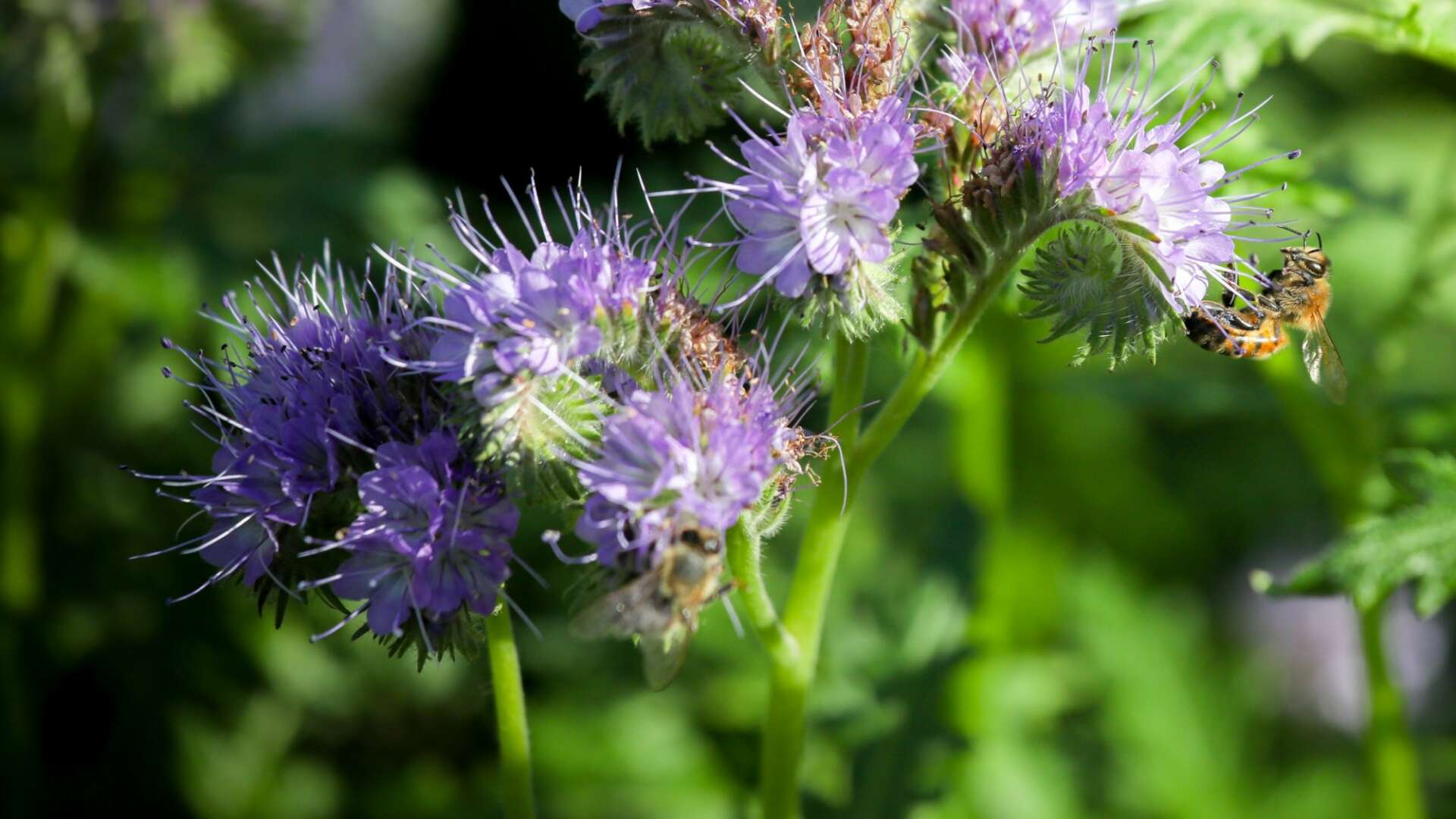
The UK’s pollinators have always faced variable weather, but climate change is making heatwaves, droughts, intense rainfall and unseasonal temperatures more frequent and severe. These shifts disrupt both insects and flowering plants, threatening biodiversity, ecosystem resilience and food production.
Pollination supports the reproduction of most flowering plants, and many fruit, vegetable and oilseed crops. Declines in pollinator numbers, activity or efficiency can therefore affect wildlife, agriculture and food security (1,2).
The heatwave problem
Warm weather can increase insect activity, but only within limits. Many bees only tolerate narrow temperature ranges, and extreme heat can reduce survival and population recovery, especially in bumblebees (3,4). During heatwaves, pollinators often forage less to avoid overheating. Bumblebees are vulnerable because their large, furry bodies are adapted to cooler conditions, so prolonged heat can divert energy from feeding and reproduction into regulating their temperature (3,5).
Heat also affects plants by shortening flowering, accelerating flower ageing, and reducing nectar production, leaving pollinators with fewer resources when flowers would normally be abundant (5,6).
Drought and declining floral resources
Dry weather is another major pressure on pollinators. Water stress often reduces flower production and nectar availability, leading to fewer pollinator visits and forcing insects to spend more energy searching for food (7).
Because bees, hoverflies, butterflies and moths depend on a continuous supply of pollen and nectar, drought-driven gaps in flowering can reduce larval development, adult longevity and population growth (5,7). In farming systems, drought can compound existing stresses because moisture-stressed crops may receive fewer insect visits, reducing yields or fruit and seed quality.
Too much rain
Heavy rain can also suppress pollination. Wet, windy conditions reduce insect flight and foraging, while intense downpours can damage flowers, wash away nectar or make pollen less viable. Even short periods of poor weather during peak bloom can reduce successful pollination.
Disrupted seasonal timing causes mismatch
Climate change disrupts seasonal timing, causing ‘phenological mismatch’. Many plants now flower earlier in response to warmer springs, while pollinators may not shift emergence dates at the same rate. This can create mismatches: flowers may bloom before pollinators are active, or insects may emerge after peak flowering and struggle to find enough food. Research has highlighted the risk that changes to climate-driven timing could weaken plant-pollinator networks and long-established ecological relationships (1,8,9). Specialists are particularly vulnerable. Generalist bees and hoverflies can use many different flowers, but specialist pollinators, such as the Bilberry mining bee (Andrena lapponica) or Sainfoin bee (Melitta dimidiata), that only feed on one or two plants are declining.
Climate change will not affect all pollinators equally. Some warm-adapted species may expand northwards or benefit from longer growing seasons, but cool-adapted species are generally more at risk. Evidence shows contractions in the southern ranges of several bumblebees, with northern expansion failing to compensate fully for losses (3,4).
Mountain and upland species are especially exposed because suitable habitats shrink as temperatures rise and there may be little higher ground left to colonise. The likely result is a reorganisation of UK pollinator communities, with uncertain consequences for ecosystems and crops.
Implications for food production
Disrupted pollination matters for food production as well as wildlife. Apples, pears, cherries, strawberries, field beans and oilseed rape all benefit from insect pollination. Lower pollinator abundance or efficiency could reduce yields, fruit quality and farm profitability. Climate change also interacts with habitat loss, pesticides and disease, making combined pressures especially damaging (12).
Extreme weather is becoming a major driver of change in UK pollinator communities. Heatwaves, droughts, heavy rain and shifting seasons affect both insects and flowering plants, threatening the relationships that underpins pollination. Protecting pollinators will require habitat conservation, climate mitigation and more resilient agricultural and natural landscapes that embrace diversity.
Winners and losers in a warming climate
• Ivy leaf mining bee. Mild winters have benefited the ivy leaf mining bee (Colletes hederae), which was first observed in the UK, in Sussex, in 2001. They look quite similar to a honeybee, but are slightly hairier and you will commonly see them feeding on ivy flowers in autumn. Milder winters has allowed them to move northwards and they have now colonised most of the UK (10).
• Moss carder bee. Conversely, warmer conditions have not been so favourable for the moss carder bee (Bombus muscorum). This ginger-coloured bumblebee favours cool damp mossy conditions, often on moorland and coastal areas. Warmer drier conditions have seen a sharp decline in southern coastal regions, although it still survives in the cooler boggy conditions in the north of Scotland (11).
What can you do to help?
Pollinator resilience can be strengthened by protecting and restoring flower-rich habitats, including meadows, hedgerows, urban green spaces and wildlife-friendly gardens.
- Plant a diverse range of plants flowering from early spring to late autumn to help prevent seasonal food shortages and allow pollinators to move as conditions change. Early flowering plants include hellebores, aubretia, alyssum, and primrose. For late spring and summer: lavender, verbena and wallflower. For late summer/early autumn: Echinacea spp, Tagetes spp, solidago, honeysuckle and ivy (13).
- Ensure you have a range of flower shapes that suit different pollinators. Many bumblebee species, especially the garden bumblebee (Bombus hortorum) and carder bee (Bombus pascuorum) have long tongues so favour longer more tubular flowers such as honeysuckle, lavender and pulmonaria. Shorter tongued insects such as mining bees, honey bees and hoverflies favour more open flower structures such as plants in the daisy (asters, helenium, echinacea) or carrot family (fennel, dill, cow parsley) (14).
- Reducing the frequency of lawn mowing has been shown to significantly increase pollinator diversity and number of pollinators (15). Less mowing allows more non-grass plants, such as white clover, to thrive. These are an important food source for bumblebees (16).
- Allow common, native weeds to grow. Some of our most common weeds such as the dandelion are superfoods for pollinators, being especially rich in pollen and nectar (17).
- Ornamentals are not the only food for pollinators – many herbs such as basil, marjoram, coriander, dill, rosemary, chives and sage all provide an excellent source of pollen and nectar (18).
References
1. Wyver, C. et al. Climate-driven phenological shifts in emergence dates of British bees. Ecol. Evol. 13, e10284 (2023).
2. Scholes, R. J. et al. IPBES (2018): Summary for policymakers of the assessment report on land degradation and restoration of the Intergovernmental Science-Policy Platform on Biodiversity and Ecosystem Services. https://research.utwente.nl/en/publications/ipbes-2018-summary-for-policymakers-of-the-assessment-report-on-l/ (2018).
3. Soroye, P., Newbold, T. & Kerr, J. Climate change contributes to widespread declines among bumble bees across continents. Science 367, 685–688 (2020).
4. Kerr, J. T. et al. Climate change impacts on bumblebees converge across continents. Science 349, 177–180 (2015).
5. SCAVEN, V. L. & RAFFERTY, N. E. Physiological effects of climate warming on flowering plants and insect pollinators and potential consequences for their interactions. Curr. Zool. 59, 418–426 (2013).
6. Takkis, K., Tscheulin, T. & Petanidou, T. Differential effects of climate warming on the nectar secretion of early-and late-flowering Mediterranean plants. Front. Plant Sci. 9, 874 (2018).
7. Phillips, B. B. et al. Drought reduces floral resources for pollinators. Glob. Change Biol. 24, 3226–3235 (2018).
8. Memmott, J., Craze, P. G., Waser, N. M. & Price, M. V. Global warming and the disruption of plant–pollinator interactions. Ecol. Lett. 10, 710–717 (2007).
9. Hegland, S. J., Nielsen, A., Lázaro, A., Bjerknes, A. & Totland, Ø. How does climate warming affect plant‐pollinator interactions? Ecol. Lett. 12, 184–195 (2009).
10. Chaplin, E. The life cycle of Ivy Bees | Sussex Wildlife Trust. The life cycle of Ivy Bees https://sussexwildlifetrust.org.uk/news/the-life-cycle-of-ivy-bees (2024).
11. Moss carder bees of Cornwall. Bumblebee Conservation Trust https://www.bumblebeeconservation.org/what-we-do/our-projects/current-projects/trust-led-projects/moss-carder-bees-of-cornwall/ (2026).
12. Potts, S. G. et al. Global pollinator declines: trends, impacts and drivers. Trends Ecol. Evol. 25, 345–353 (2010).
13. The Wildlife Trusts. The best plants for bees and pollinators | The Wildlife Trusts. https://www.wildlifetrusts.org/actions/best-plants-bees-and-pollinators.
14. Sikora, A., Michołap, P. & Sikora, M. What kind of flowering plants are attractive for bumblebees in urban green areas? Urban For. Urban Green. 48, 126546 (2020).
15. Wastian, L., Unterweger, P. A. & Betz, O. Influence of the reduction of urban lawn mowing on wild bee diversity (Hymenoptera, Apoidea). J. Hymenopt. Res. 49, 51–63 (2016).
16. Larson, J. L., Kesheimer, A. J. & Potter, D. A. Pollinator assemblages on dandelions and white clover in urban and suburban lawns. J. Insect Conserv. 18, 863–873 (2014).
17. Hicks, D. M. et al. Food for Pollinators: Quantifying the Nectar and Pollen Resources of Urban Flower Meadows. PLOS ONE 11, e0158117 (2016).
18. Vernon, J. Jean Vernon’s guide to planting herbs for bees & pollinators. Jekka’s https://www.jekkas.com/blogs/jekkas-blog/guide-to-planting-herbs-for-bees (2026).