How well do you know your soil?
- Tags
- Members experiment archive
The aim was to evaluate people’s perception and understanding of soil health more generally, and to what extent they prioritised it in their own garden. Results were collected without identifying people or collecting personal data, then collated. Statistical analysis (using Kruskal-Wallis or Mann-Whitney U tests) was used to compare the effects of gender, age, gardening experience, and self-perceived soil knowledge on the answers given.
Knowledge of soil health
In the survey, the majority of respondents (85%) had more than 10 years gardening experience although a small number had much less.
We asked people to rate their knowledge of soil health on a 1-5 scale ranging from ‘No knowledge’ to ‘Extremely knowledgeable’.
People with more years’ gardening experience were far more likely to rate themselves as having a greater knowledge of soil health; only 20% of respondents with less than a year’s experience rated themselves as having moderate or better soil knowledge, whereas the figure was 87% for those with more than 10 years gardening experience. (p<0.001). This is not surprising, but it does demonstrate that more experienced growers value the importance of learning about soil health.
Within this group, males were signicantly) more likely to rank themselves as having expert knowledge than females! (p=0.0017). Within the participants, 35% of males ranked themselves as being very or extremely knowledgeable compared to 18% of females.
How people prioritise soil health
We asked how much of a priority soil health was to gardeners. Overall, 87% of people stated that soil health was a high or very high priority (Figure 1). More experienced gardeners were significantly more likely to rate soil health as a high priority than less experienced gardeners (p<0.01). For example, 92% of those with more than 10 years gardening experience rated soil as a high or very high priority whereas the figure was only 20% for those with less than a year’s experience or 42% for those with 1-2 years’ experience.
Figure 1 Effect of gardening experience on soil health priority
How people test their soil
We asked what methods participants used to test their soil, giving them a choice of 5 of different tests. Participants were able to choose more than one test.
Figure 2 Various tests used to evaluate soil
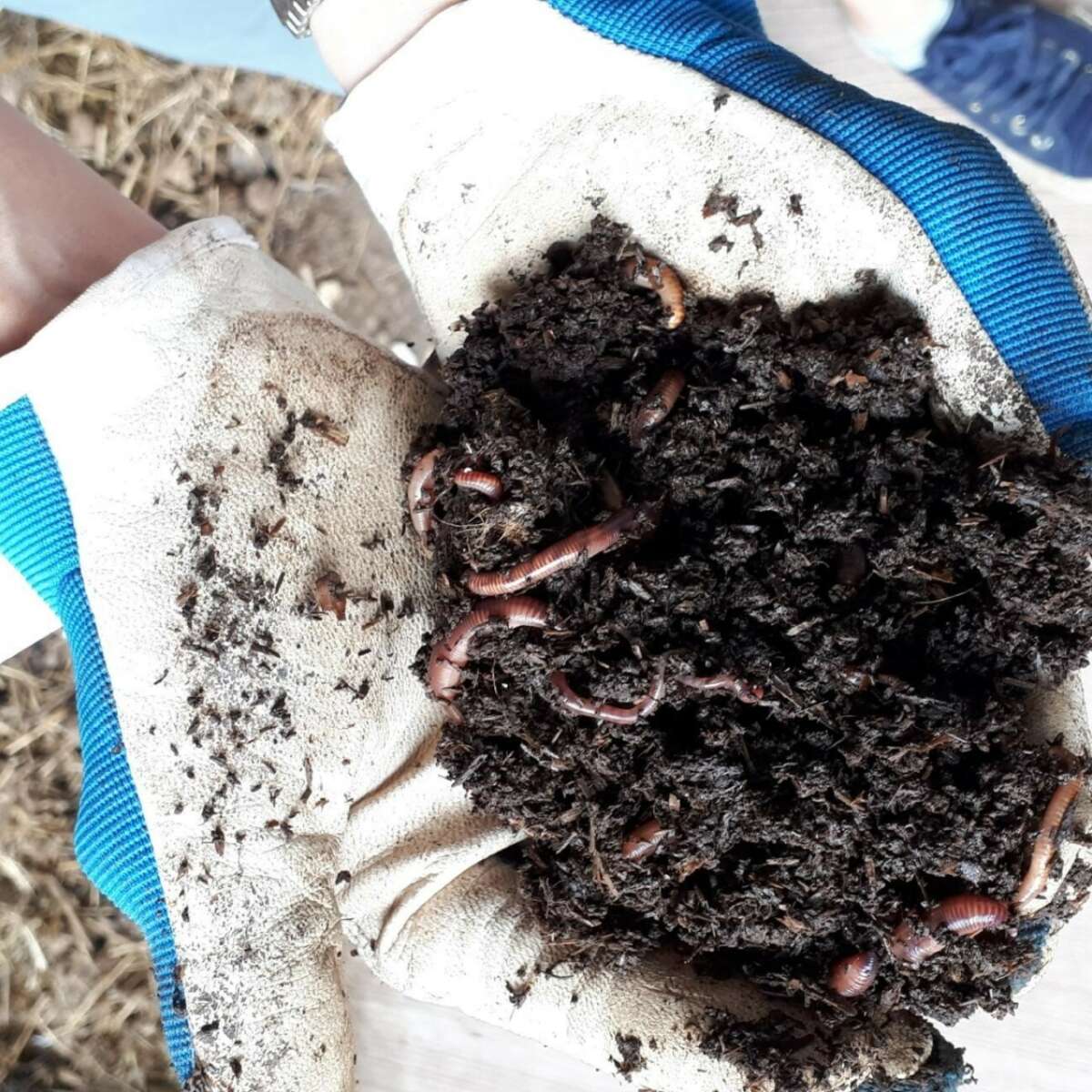
The most popular soil tests were looking for earthworms (92% of respondents) and examining the texture in the hand (87% of respondents) (Figure 2) Earthworms are a good indicator of soil health and biology generally as the population responds to physical, chemical and biological changes.7
More than half of respondents also examined the surface of the soil (58%) or looked at the colour (63%). There are many studies that show that the colour of the soil can be used as a good indicator of organic matter content7,8
Defining a healthy soil
Participants were asked to define a healthy soil. The following word cloud give and indication of responses, with larger words being mentioned more times than smaller words.
‘Organic’ (31%) ‘matter’ (28%), ‘life ‘(26%) and ‘worms’ (27%) were the most used words. This is encouraging that the group of participants taking part had a good understanding of the importance of biological life in the soil. Alusions to structure were also frequently mentioned with ‘Crumbly’ mentioned by 14%. It is interesting that ‘nutrients were only mentioned by 7%, showing that participants placed less value on the chemical aspects of the soil than the biological and structural aspects.
Questions about wider issues relating to soil
We asked a number of questions about the role of soil more broadly and its contribution to food production, biodiversity, climate change mitigation and flood prevention. We didn’t expect people to necessarily know the correct answers beforehand but were interested to see what the most common guesses were. For all these questions gender and age did not affect the response given, and gardening experience and self-identified knowledge did not affect the chances of giving the correct answer.
Soil and food production
The most widely recognised role of the soil is to support food production, and it is estimated that 95% of our food production is dependent on it.1 The majority (72%) of respondents strongly agreed that the soil is essential for food production and 63% of responded correctly that 95% of our food production is dependent on the soil.
Soil and carbon storage
Soils estimated to contain around 80% of global carbon. 2 74% of participants strongly agreed that soils have a vital role in mitigating climate change. Additionally, 42% of participants correctly, guessed that UK soils store enough carbon to mitigate 80 years worth of CO2 emissions.3 Intensive agriculture including extensive cultivation and use of synthetic fertilisers has contributed to UK soils losing around 40-60% of their organic carbon. 3
Soil and biodiversity
Soils are a valuable repository for biodiversity, with recent estimates that 59% of known species are held in the soil.4 In keeping with this, 84% of respondents strongly agreed with the statement “Soil is essential for conserving biodiversity”
Our participants were aware that the soil is an important reservoir of biodiversity, with 30% of people guessed correctly at 60% of known species and slightly more (36%) overestimating at 80%.
Soils and flooding
The organic matter in soil acts like a sponge an can hold up to 20 times its own weight in water, so can reduce flooding as well as storing water during drought. 3 Consistent with this, 84% of participants agreed with the statement “ Soil plays a large part in preventing flooding”.
The majority of participants underestimated the amount of water that soil organic matter can hold, with 44% guessing at 10 times and only 13% guessing the correct answer of 20 times.
Soil and groundwater
Over application of nutrients can result in considerable leaching of soluble nutrients, especially if soils are left bare over winter. Gardens and urban horticulture are not immune from polluting the ground water. A number of studies in Sweden indicated that nutrients were over applied to urban allotments in the majority of cases examined5 and measurements showed that this resulted in leaching.6
Despite the results of these studies suggesting that gardeners over apply nutrients, there was some awareness here: 63% of participants strongly agreed and 32% agreed that the way they managed their soil could affect the ground water.
Conclusion
This short questionnaire demonstrated that soil health was a priority for the majority of gardeners, and that there was generally a good understanding of the role that soil life played in maintaining a healthy and productive soil. It is interesting that soil health was a much higher priority for experienced gardeners than new gardeners. It is important that the soil health message gets out to those starting out and is not just in the realm of more experienced gardeners. The limitations of this study are that it is a somewhat self-selecting group: people with more an interest in soil health are more likely to take part in the survey.
References 🔗
1. Food and Agriculture Organisation of the United Nations. Healthy Soils Are the Basis for Healthy Food Production. (2015).
2. British Society of Soil Science. SCIENCE NOTE: SOIL CARBON. (2022).
3. Fowler, R. The State of the Environment Soil. 22 (2019).
4. Anthony, M. A., Bender, S. F. & Van Der Heijden, M. G. A. Enumerating soil biodiversity. Proc. Natl. Acad. Sci. 120, e2304663120 (2023).
5. Van De Vlasakker, P. C. H., Tonderski, K. & Metson, G. S. A Review of Nutrient Losses to Waters From Soil- and Ground-Based Urban Agriculture—More Nutrient Balances Than Measurements. Front. Sustain. Food Syst. 6, 842930 (2022).
6. Sieczko, A. K., Van De Vlasakker, P. C. H., Tonderski, K. & Metson, G. S. Seasonal nitrogen and phosphorus leaching in urban agriculture: Dominance of non-growing season losses in a Southern Swedish case study. Urban For. Urban Green. 79, 127823 (2023).
7. van Leeuwen, M. M. W. J. et al. Visual soil evaluation: reproducibility and correlation with standard measurements. Soil Tillage Res. 178, 167–178 (2018).
8. Ball, B. C. et al. Visual soil evaluation: A summary of some applications and potential developments for agriculture. Soil Tillage Res. 173, 114–124 (2017).